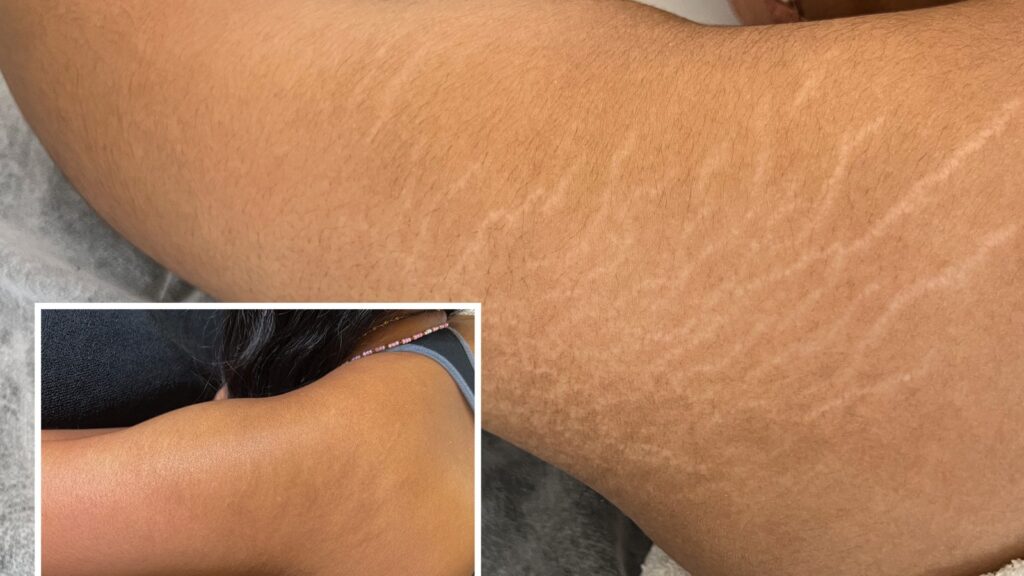
If you’ve ever noticed faint streaks or lines on your skin—on your stomach, thighs, hips, or arms—you’re not alone. Stretch marks are one of the most common skin concerns people talk about, yet one of the most misunderstood. Almost everyone will get them at some point in life. They appear after pregnancy, during puberty, with sudden weight changes, or even from rapid muscle growth.
Despite being so common, the internet is full of confusing advice about stretch mark removal. You’ve probably seen creams that promise to “erase” them in a week, or home remedies that claim to work miracles. But do any of these really work? And are stretch marks something you should even be worried about?
To set the record straight, let’s dive into some of the biggest myths and facts about stretch marks—so you know what’s true, what’s not, and which treatments are worth your time and money.
Myth 1: Stretch Marks Can Vanish Completely
Many people believe stretch marks can be wiped away entirely with the right product. Unfortunately, this isn’t true.
Fact: Stretch marks form in the middle layer of your skin, called the dermis. Because they’re deep, surface-level creams alone can’t fully remove them. The good news? Dermatological treatments such as laser therapy, microneedling, and retinoid creams can fade them dramatically, making them far less noticeable. While you may not get rid of them 100%, you can expect smoother skin and improved texture.
Myth 2: Only Women Get Stretch Marks
Stretch marks are often talked about in the context of pregnancy, which makes it seem like they’re only a women’s concern.
Fact: Men get stretch marks too. Teenage boys often see them on their shoulders or back during growth spurts, while men who bulk up at the gym may notice them around their biceps or chest. Rapid weight gain and hormonal changes affect both men and women equally. Stretch marks don’t discriminate.
Myth 3: Expensive Creams Work Better
It’s easy to assume that if you spend more on a cream, you’ll get better results.
Fact: Price isn’t what matters—ingredients are. A $20 cream with retinoids, hyaluronic acid, or glycolic acid may be more effective than a luxury lotion with fancy packaging. Most over-the-counter products can moisturize and soften skin, but only medical-grade formulas or in-office procedures can make a big difference.
Myth 4: Good Skincare Prevents Stretch Marks Entirely
Some believe that if you moisturize religiously, you’ll never get stretch marks.
Fact: While hydration does help skin stay more elastic, it cannot completely prevent stretch marks. Genetics play a big role. If your parents had them, you’re more likely to get them too. Skincare routines can, however, make marks less severe and help the skin recover more smoothly.
Myth 5: Tanning Covers Up Stretch Marks
Plenty of people try to hide their stretch marks with a tan, thinking it will blend them in.
Fact: Stretch marks don’t tan the same way as the rest of your skin. In many cases, they actually look more obvious when your skin darkens. Worse, too much sun exposure can damage skin and make the marks harder to treat later. If you want temporary coverage, body makeup or self-tanners are safer options.
Myth 6: Home Remedies Work Just As Well as Medical Treatments
You’ve probably seen DIY recipes with coconut oil, cocoa butter, or aloe vera.
Fact: These remedies can improve how your skin feels and may reduce dryness, but they won’t make stretch marks vanish. Dermatologists recommend combining good skincare with medical treatments like microneedling, chemical peels, or fractional lasers if you’re looking for visible results. Natural remedies are great for support, not for removal.
Myth 7: Stretch Marks Are a Sign of Poor Health
Some people assume stretch marks mean something is “wrong” with the body.
Fact: Most of the time, stretch marks are completely harmless. They’re simply a sign that your skin stretched quickly. While certain medical conditions (like Cushing’s syndrome) or long-term steroid use can cause severe marks, the majority are nothing more than cosmetic.
What Actually Works for Stretch Mark Removal
If you’re considering treatment, here’s what dermatologists actually recommend:
- Laser therapy – Boosts collagen and reduces color contrast.
- Microneedling – Encourages new skin growth and smooths out texture.
- Chemical peels – Help fade marks and resurface the skin.
- Prescription retinoids – Increase collagen production.
- Radiofrequency treatments – Tighten skin and reduce scarring effect.
Remember: results take time. Stretch marks won’t change overnight, but with consistent care, you’ll notice steady improvement.
The Bottom Line
Stretch marks are normal. They don’t mean your body is unhealthy, and they don’t make you less attractive. But if you’d like to reduce their appearance, it’s important to understand the difference between myth and fact. Stretch mark removal is about setting realistic expectations: complete erasure isn’t possible, but significant improvement is.
FAQs About Stretch Mark Removal
Q1. Do stretch marks fade naturally?
Yes. Over time, they usually fade from red or purple to silvery-white, becoming less noticeable. But they rarely disappear completely without treatment.
Q2. What is the fastest way to remove stretch marks?
There’s no instant fix. Treatments like laser therapy and microneedling, combined with prescription creams, offer the fastest visible improvements.
Q3. Are stretch mark creams worth buying?
Yes, if they contain active ingredients like retinoids or hyaluronic acid. They won’t erase marks, but they can help improve skin tone and texture.
Q4. Can stretch marks be prevented?
Not entirely. Genetics are a major factor. However, staying hydrated, eating nutrient-rich foods, and maintaining a stable weight can help reduce severity.
Q5. Are professional treatments safe?
Yes, when done by licensed dermatologists. Procedures like microneedling and lasers are safe and effective, with minimal downtime.